How to Manage Red Mites in your Flock
Red Mites are one of the most common and damaging external parasites affecting backyard and smallholder poultry flocks. Active during the warmer months, typically from May through to October, these tiny parasites can multiply at an alarming rate. With a life cycle of just 7–10 days, a small unnoticed population can quickly become a full-scale infestation if conditions are right.
Left unmanaged, Red Mites can severely impact bird welfare, egg production and overall flock health. The good news? With routine checks, proactive prevention and the right products, they can be effectively controlled.
What are Red Mites?
Red Mites (Dermanyssus gallinae) are nocturnal parasites that feed on poultry at night before retreating into cracks and crevices in the housing during the day. Unlike lice, they do not live permanently on the bird, which is why infestations are often missed until numbers are high.
They thrive in warm weather and hide in:
- Perch ends
- Nest box joints
- Roof panels
- Wooden cracks and crevices
- Under felt roofing
- Around fixing screws and joints
Because they spend most of their time in the housing rather than on the bird, treating the coop itself is essential for effective control.
Why Red Mites are a serious problem
A heavy infestation can:
- Cause anaemia (leading to pale combs and wattles)
- Reduce egg production or stop laying altogether
- Trigger stress and irritation within the flock
- Cause hens to refuse to roost at night
- Lead to blood spots on eggs (from squashed mites)
- In severe cases, result in bird losses
Before a full outbreak develops, there are often subtle warning signs:
- Hens reluctant to enter the coop at dusk
- Increased feather pecking or irritability
- Pale birds or reduced vitality
- Tiny blood spots on eggs
- Grey, ash-like deposits (mite faeces) in housing
Spotting these early can make all the difference.
Many poultry keepers only discover Red Mites when they are already over-run. Prevention is always easier and far less stressful than cure.
Routine coop cleaning provides the perfect opportunity to inspect and treat housing before numbers escalate.
Step 1: Thorough clean out
Remove all bedding and dispose of it securely. Scrub the housing thoroughly, paying particular attention to:
- Perches
- Joints
- Nest boxes
- Under roof panels
A deep clean helps remove organic debris where mites thrive.
Step 2: Target the hiding places
Because Red Mites hide deep within cracks and crevices, surface treatments alone are not enough.
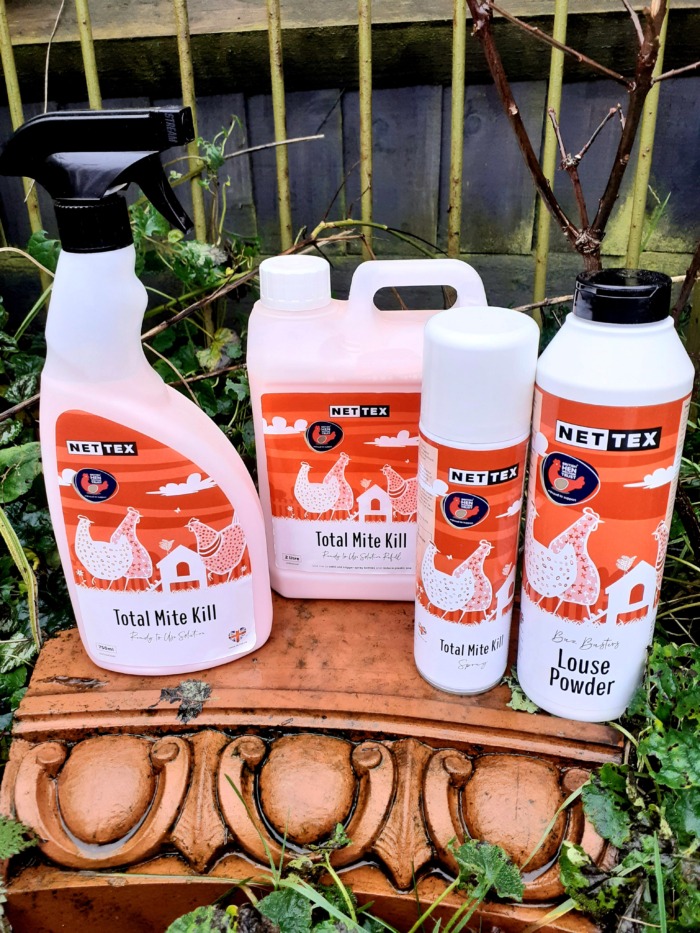
Nettex Total Mite Kill is formulated with an oily base designed to penetrate into the small gaps where mites live and breed. This ready-to-use spray contains permethrin and works by targeting mites, lice and other crawling insects directly within the housing.
Apply thoroughly after cleaning, ensuring all crevices, perch ends and joints are treated.
Step 3: Follow up with powder
After spraying, apply Nettex Buz Busters Louse Powder around the housing and key areas, such as dustbaths, as part of an integrated control approach. As an alternative for organic systems, Nettex Total Hygiene Powder is a naturally absorbent powder that can be applied directly to birds, housing, dust baths and bedding, helping create an environment that discourages mites and crawling insects (and is suitable for organic systems).
For active infestations clean, spray and powder every 3 days initially. Once numbers are under control you can reduce to weekly preventative treatments. Consistency is key to breaking the life cycle.
Red Mites can go from egg to laying hundreds more eggs in just a week under ideal conditions. That means missing even one cleaning cycle during peak season can allow numbers to rebound quickly.
Red Mites are an unfortunate reality of poultry keeping, but they don’t have to become a crisis. Remember, a simple routine of: Clean → Spray (Nettex Total Mite Kill) → Powder (Nettex Buz Busters Louse) → Repeat can keep populations under control and prevent serious outbreaks.